Extracte de la roda de premsa d'en Bruce, a París, el 16/02/12, presentant Wrecking Ball
divendres, 17 de febrer del 2012
dijous, 16 de febrer del 2012
Bruce: La vida del rock és brutal. No deixeu que ningú us digui el contrari: "Working On A Dream"

"La vida del rock és brutal. No deixeu que ningú us digui el contrari"
"El moviment Ocupem Wall Street ha sigut molt poderós per canviar les converses a nivell nacional. El Tea Party havia copat les converses durant un temps però ara la gent està parlant sobre la igualtat econòmica. Aquesta és una conversa que no s'havia tingut a Amèrica en els darrers 20 anys"
"Vaig conèixer en Clarence quan tenia 22 anys, l'edat del meu fill (Evan), realment encara era un nen. Alguna cosa passava quan estàvem junts, disparava la meva imaginació. Perdre'l va ser com perdre alguna cosa elemental, l'aire o la pluja"
"Quan sento el solo de saxo (a Land Of Hope And Dreams), és un moment molt maco per a mi"
"Quan era un nen em van rentar el cervell amb el catolicisme (...) Si has sigut catòlic, sempre ets un catòlic"
"Com a artista, és millor mantenir una certa distància amb el poder"
En Neal McCormick ha publicat ja la seva entrevista al Bruce, feta avui a París. Aquí la teniu:
Bruce Springsteen: I enjoy artists who take on the world
Bruce Springsteen’s 17th studio album is his most overtly political yet. At its launch in Paris, the blue-collar icon reveals why .
Bruce Springsteen: 'I enjoy artists who take on the world'
“You can never go wrong in rock’n’roll when you’re p---ed off,” according to Bruce Springsteen. In Paris yesterday to unveil his new album, Wrecking Ball, to the world’s media, Springsteen admitted it had been written in a spirit of political anger. “My work has always been about judging the distance between American reality and the American Dream.”
Right now, he suggested, the distance was greater than it had ever been in his lifetime. With the financial crisis, “an enormous fault-line cracked the American system wide open and its repercussions are just beginning to be felt.”
Wrecking Ball is the 17th studio album from America’s blue-collar rock icon. Befitting troubled times for the working man, it is Springsteen’s most overtly political collection of songs. The title, he said, reflects “the flat destruction of some American ideals and values over the last 30 years. It seemed like a good metaphor.”
While the album is underpinned by a dark fury, in person Springsteen was relaxed, amusing and philosophical. Asked if he felt that his role as voice of protest was a burden, he laughed out loud. “I’m terribly burdened at night when I’m sleeping in my big house. It’s killing me,” he joked. “The rock life is brutal, don’t let anyone tell you different.”
Actually, he conceded, just to be a musician was “a charmed life. That’s why they call it playing.” But he spoke eloquently about how his family background, growing up in a household where his father had been “emasculated” by long-term unemployment, fuelled his interest in the underlying political causes, describing his songwriting as “having a conversation with myself”.
If so, it is a conversation that is taking a bleak turn. Springsteen has long chronicled the underbelly of the American Dream but this time he sounds sad, angry and even, at times, close to defeat. It is his Grapes of Wrath, an album for the New Depression.
Despite the anthemic roar and gutsy drive of the opening track, We Take Care Of Our Own, Wrecking Ball is not the kind of back-to-basics E Street rock Springsteen has been essaying in recent years. Reaching into the raucous roots of his Seeger Sessions, referencing gospel, folk and blues while bringing in drum loops, hints of hip hop and a raw mix that pushes vocals high, Springsteen appears keen to build bridges between the past and the present, finding contemporary resonances in timeless sources.
It also features the last sax solo from his long-time sparring partner, the late Clarence Clemons. “I met Clarence when I was 22, my son’s age, still a child really. Something happened when we got close, it fired my imagination. So losing Clarence was like losing something elemental, the air or the rain. There’s just something missing. We were lucky to get him on Land of Hope and Dreams. When the sax solo comes up, its a lovely moment for me.”
There is, in the essence of Springsteen’s oeuvre, a very American sense of exulting in the heroic underdog, but here there is a blackness to his mood, fuelled not just by the sense that the dignity of the working man is being assaulted and undermined, but that such assaults are, perhaps, a politically inevitable expression of the very character of the nation.
Time and again, Springsteen sets the image of the honest toiler against “bankers”, “fat cats” and “robber barons”. “An outrageous theft occurred that struck to the heart of the American idea,” suggested Springsteen. “And there has been no accountability.”
He does, however, see cause for optimism. “The Occupy Wall Street movement has been powerful about changing the national conversation. The Tea Party set the conversation for a while but now people are talking about economic equality. That’s a conversation America hasn’t had for 20 years.”
There is also a religious dimension to Springsteen’s latest songs. The album shifts towards the spiritual uplift of gospel music in its rousing finale, evoking Jesus and the risen dead. “I got brainwashed as a child with Catholicism,” joked Springsteen, who says biblical imagery increasingly creeps into his songs almost unbidden. “Its like Al Pacino in The Godfather: I try to get out but they pull you back in! Once a Catholic, always a Catholic.”
Springsteen supported Obama’s presidential campaign, and We Take Care of Our Own has already been added to the Obama re-election playlist, yet the often bitter tone of the album suggests Springsteen is not impressed with the powers-that-be.
He admitted, however, that he still supports Obama, who he felt had achieved some things in a difficult political environment. Springsteen doubted he would be actively involved in Obama’s campaign, however. “As an artist, its better to maintain a certain distance from the seat of power.”
He said the only thing he was really good at was making music. “I enjoy artists who like to take on the world as well as entertain their audience. I write to process my own experiences and if I can do that for me, I hope I can do that for you.”
He did, however, suggest that Obama could have a shot at Springsteen’s job. “Obama can sing!” he joked, referring to the Presidential karaoke performance widely viewed on YouTube. “Let’s stick together,” croaked Springsteen, then laughed at his own poor effort. “He’s better than me! I can’t sing that!”

Primera revisió de Wrecking Ball, segons The Telegraph: "Across The Border"
En Neil McCormick, periodista del diari anglès The Telegraph, ha sigut dels afortunats que ha pogut assistir avui a la roda de premsa que en Bruce ha ofert a París, com a presentació europea del nou àlbum "Wrecking Ball".
Els assistents han pogut escoltar el disc sencer i aquesta és l'opinió que n'ha fet, cançó a cançó:
 |
| En Bruce arrivant a París |
1. We Take Care of Our Own
Muscular anthem of blue-collar pride and American togetherness. As stirring as the first single is, only little background touches of strings and echoes keep it from being Springsteen-by-numbers. The uplifting lyrics are just generic enough to have already been adopted by Obama for his re-election campaign, which might be considered ironic when the political anger that drives the album seems to stem from a nation that is not really taking care of its own, and where Springsteen claims to be “knocking on the door that holds the throne” and deploring “good intentions gone dry as a bone”.
2. Easy Money
A stomping rock beat houses a Celtic soul romp, with strumming acoustic guitars and fiddles. Its zydeco-meets-glam-rock jolliness is undermined when you realise that it’s the song of a couple of hustlers prepared to do violence to fill their wallets. Springsteen is whooping and wailing like mugging is fun, but his real target is the bigger economic crimes that underpin his outlaw anthem. “All those fat cats will just think it’s funny,” his small-time hood acknowledges of his petty misdemeanours, “looking for easy money”.
3. Shackled and Drawn
Like a chaingang blues with an Irish lilt, Springsteen channels the exuberant energy of the folk songs he recorded for the Seeger sessions, where even a lament sounds like a party. “What’s a poor boy to do in a world gone wrong?” he calls, but makes it universal and political when his shackled narrator turns his attention to the party going on “up on banker’s hill”, where “it’s still fat and easy”.
4. Jack of All Trades
A mordant waltz, underpinned by a slow arpeggio piano figure, this is another lament for the plight of the unemployed, delivered like a 1950s rock’n’roll lullaby. There is no doubt who the villains are in Springsteen’s latest epistle from the American frontline: “The banker man grows fat / The working man grows thin / It’s all happened before /And it’ll happen again”.
Effective in its own right, with a lonely trumpet adding soulful flourishes, the major chord sequences are perhaps just a bit too predictable. You could say these are folk songs for a new depression, but does the message risk being blunted by the over-familiarity of the medium?
5. Death to My Hometown
A martial beat drives along this folky ramble about a ghost town, destroyed not by “cannon ball” or “powder flash”, although the Civil War connotations are kept up with tin whistles piping and an ethereal choir haunting the chorus. In a Dylanesque coda, blame is laid once again at the feet of villainous bankers, or rather, in the archaic language Springsteen employs, “the robber barons”.
6. This Depression
Equating depression emotional and economic, Springsteen pits a delicate melody against a harsh, sledgehammer drum pattern to sombre effect. Deft little sonic touches keep a dark little song burning, with an atmospheric echoing lead solo and hints of ghostly voices.
7. Wrecking Ball
The title track has the slow burn of classic E Street Band, a defiant narrative driven by a thrashed acoustic guitar, the band swelling and subsiding as it follows the Boss’s vocal lead, always threatening to explode. When the blast comes, it is led by trumpets, not saxophone or electric guitar, a flavour that adds to the sense that Springsteen is looking back to a musical time before rock and roll for his inspiration. His exhortation to “hold tight to your anger” seems to be the core message of this lyrically dark yet musically uplifiting album..
8. You’ve Got It
Light relief, in the form of an optimistic love song, a little pop rock gem driven by the interplay of acoustic and electric guitars and full of pithy couplets. “No school ever taught it / But baby you’ve got it / Now come on give it to me”
9. Rocky Ground
The track where a new idea of Springsteen really breaks the surface. A sampled cry of “I’m a soldier” introduces an understated female chorus phrase sung over a downbeat, echoing looped drum pattern. The ambience hints at the brooding soul of Philadelphia. Lyrics evoke biblical language, with the money lenders in the temple still the focus of attention, but as a gospel choir pitches in, all these disparate elements start to fuse into a bold, weird 21st-century anthem of hope. Is this the first Springsteen song to feature a rapper?
10. Land of Hope and Dreams
Picking up on this nu-gospel quality, Springsteen strikes out for rocking E Street uplift over loops and samples. This universal chorus has been a staple of Springsteen shows for a long time, and it is great to hear it finally find its place on an album. No one else could sing a cliché like “This train carries saints and sinners” and still sound not just like they mean it, but that they are reminding us of something vital. There is even a sinuous sax solo, the ghost of the Big Man.
“All aboard,” Springsteen roars, and makes you want to jump on. He doesn’t make the mistake of overstating his case. It’s a grand finale to an album that aims at a classic, ancient sense of folk protest.
11. We Are Alive
A campfire song for ghosts of the oppressed, martyred strikers, protesters and immigrant workers, with Springsteen strumming and whistling while a Mariachi band kicks in to celebrate the eternal possibility of good triumphing over bad as an idea, if not a reality.
It is an uplifting end to a downbeat album, that tries to channel a spirit of folk protest via roots and folk into modern-day stadium rock. One playback is not enough to tell whether Springsteen has really achieved his aim. Are the songs too simplistic to stand with the classics in his canon, or do they strike the right notes of familiar form, adult emotion and spirited delivery to repeat in the listener’s psyche? Time will tell. But it is reassuring to find that at least one old rocker is still angry and impassioned, and desperate to make a difference
dilluns, 13 de febrer del 2012
Primer directe del nou àlbum: "Souls Of The Departed"
En Bruce ha estat acompanyat de l'E Street Band al complet més un conjunt de músics als violins. En aquesta ocasió no hi ha participat la secció de vents que els acompanyarà durant la propera gira, però sí que hi eren en Curtis King i la Cindy Mizelle.
Al final de la cerimònia, en Bruce ha tornat a pujar a l'escenari per protagonitzar un duel de guitarres amb Sir Paul McCartney.

En Bruce durant l'assaig

En Bruce amb Sir Paul McCartney
divendres, 10 de febrer del 2012
Aquells detalls humans que el fan més gran: "From Small Things (Big Things One Day Come)"
Va ser el cap de setmana passat i, si fos per ell, probablement, ni s'hauria sabut. La història va anar d'aquesta manera:
Mentre la Rachel era a la sala d'urgències del Centre Mèdic Monmouth, en Bruce Springsteen va passar per allà després de visitar un amic a l'hospital.
Abans de marxar, el pare es va acostar al Bruce i li va preguntar si podia passar a saludar a la Rachel.
Ell va entrar i la mare li va dir al Bruce que la Rachel tenia tota la seva música en el seu iPod, i que probablement la Rachel l'estaria escoltant a ell en aquell moment.
Ella es va treure els auriculars de les orelles i va dir-li: "No, estic escoltant a la Shania Twain!". En Bruce es va posar a riure i li va dir que a ell també li agradava la Shania.
Van estar uns 10 minuts xerrant amb la nena i es va acomiadar de tota la família, fent-li un petó al cap de la Rachel i posant per a la foto. Segons els pares, tot plegat va ser genial i en Bruce va estar molt cordial.

La Rachel Colby i en Bruce
(La Rachel forma part del "Challenged Youth Sports Program", que és un programa sense afany de lucre, que promou l'esport entre nois i noies amb discapacitats)
dijous, 9 de febrer del 2012
Jake Clemons: "Book Of Dreams"

Després d'haver passat la major part de la seva carrera com a músic molt sol·licitat en el saxofon, la guitarra i el piano, va arribar a un punt (gràcies als estímuls de músics de la talla de Dave Grohl dels Foo Fighters i el llegendari productor musical Brad Leigh) on la composició de cançons es va convertir en el seu principal objectiu.
Jake ha compartit l'escenari amb una gran quantitat d'artistes que van des de Will Smith a Eddie Vedder i fins a Bruce Springsteen. Precisament avui s'ha fet públic que en Jake formarà part dels músics que acompanyaran al Bruce i a l'E Street Band en el proper Wrecking Ball Tour.
Jake Clemons - "Love'll Never Change"
Jake Clemons - Drop Down
Jake Clemons - Jungleland (amb la BruceBand)
El nou "exèrcit" del Bruce: Ain't Got You
Finalment, ja s'ha fet públic qui acompanyarà el Bruce i a la E Street Band a la gira Wrecking Ball. Un dels grans dubtes és qui ocuparia el lloc de l'estimat i recordat Clarence Clemons. Com no podia ser d'una altra manera, la figura d'un GRAN músic no pot ser ocupada només per una persona. I en Bruce, això ho sap.
Jake Clemons, Clark Gayton, Curt Ramm, Barry Danielian i Eddie Manion seran la secció de vent i, com en les darreres gires, Cindy Mizelle i Curtis King hi posaran els cors.
Per tant, en aquesta gira, tindrem 16 persones dalt de l'escenari. la cosa promet!


Jake Clemons, Clark Gayton, Curt Ramm, Barry Danielian i Eddie Manion seran la secció de vent i, com en les darreres gires, Cindy Mizelle i Curtis King hi posaran els cors.
Per tant, en aquesta gira, tindrem 16 persones dalt de l'escenari. la cosa promet!

Bruce Springsteen

Steve Van Zandt

Roy Bittan

Nils Lofgren

Max Weinberg

Patti Scialfa

Garry Tallent

Soozie Tyrell

Charlie Giordano

Jake Clemons

Clark Gayton

Curt Ramm

Barry Danielian
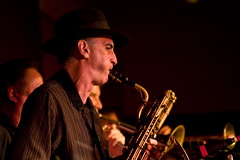
Eddie Manion

Cindy Mizelle

Curtis King
Subscriure's a:
Missatges (Atom)